
The Ashes of Resistance: An Analytical Review of Myanmar’s Five-Year Arson Campaign (2021–2026)
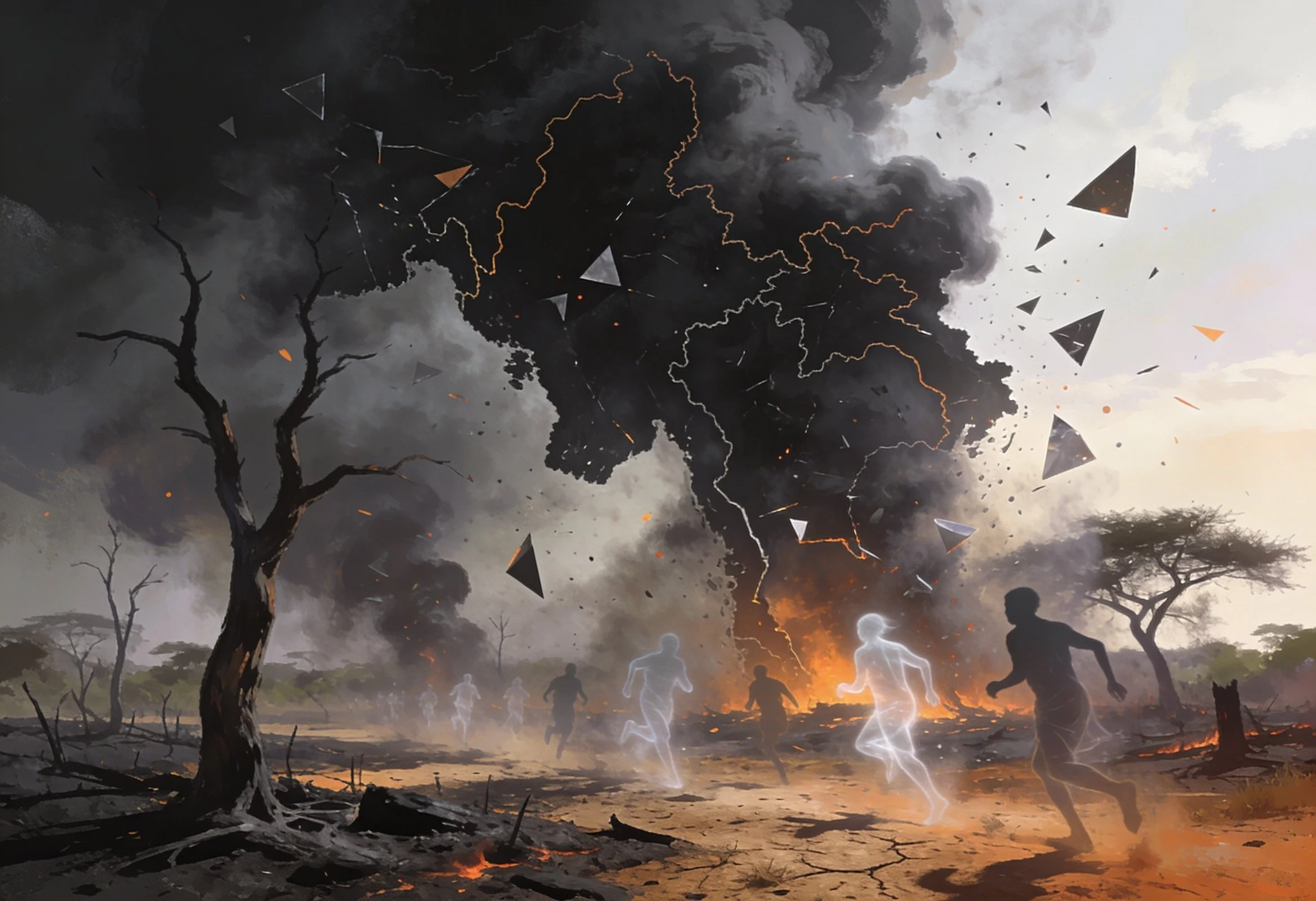
Visual generated by AI for illustrative purposes
1. Introduction
By early 2026, the civil war in Myanmar has entered its fifth year, evolving from a localized uprising into a nationwide struggle for survival. Among the various tools of repression utilized by the military junta (State Administration Council or SAC), none is as visible or devastating as the systematic use of arson against civilian populations. As of February 28, 2026, the scale of destruction is staggering: over 125,328 civilian homes have been reduced to ash since the February 2021 coup.
This article analyzes the longitudinal trends, strategic motivations, and humanitarian consequences of this arson campaign. It argues that the destruction of homes is not a collateral consequence of combat but a core tenet of the military’s "Four Cuts" strategy—designed to sever the link between resistance forces and their civilian support base. Through the lens of the latest Data for Myanmar (D4M) findings and broader international reporting, we examine how the junta’s push for "legitimacy" through sham elections has only intensified the scorched-earth tactics in 2025 and 2026.
2. The Quantitative Landscape: Five Years of Fire
The arson campaign has maintained a relentless pace, though its intensity has fluctuated according to the military’s operational priorities.
2.1 Yearly Trajectories
2021 (The Spark): Following the coup, the military began targeted burnings to suppress the initial wave of armed resistance, destroying 2,111 homes.
2022 (The Peak): This year marked the most violent phase of the arson campaign, with 46,856 homes destroyed. December 2022 remains the deadliest month on record, with 10,562 homes lost in 31 days.
2023–2024 (The Sustained Siege): High-intensity burnings continued, with over 31,000 homes lost each year.
2025–2026 (The Election Push): Despite controlling less than 25% of the country’s territory by late 2025, the military ramped up operations to secure territory for planned elections. Between December 2025 and February 2026 alone, 4,748 homes were burned across 89 villages.
2.2 Responsibility and Attribution
A critical finding of recent data is the overwhelming responsibility of the state. Approximately 97% (121,485) of all arson incidents are attributed to the Myanmar military and its affiliated militias, such as the Pyu Saw Htee. While resistance groups have occasionally targeted villages perceived as pro-military hubs, their share of the destruction is statistically marginal compared to the state-sponsored campaign.
3. Geographic Epicenters: The War in the Heartlands
The geography of arson serves as a map of the resistance. The military has focused its fire on regions where the People's Defense Forces (PDF) and Ethnic Resistance Organizations (EROs) have the strongest civilian backing.
3.1 Sagaing: The Devastated Core
The Sagaing Region remains the hardest-hit area, accounting for 63% of the nationwide total with 78,896 homes destroyed. Once the agricultural heartland of Myanmar, Sagaing has become a landscape of ruins. In townships like Yinmabin, military columns have conducted multi-day "clearance operations," systematically burning clusters of villages such as Kyauk Kone and Hnaw Pin.
3.2 The Expansion into Magway and Mandalay
As the conflict has matured, the fire has spread south and east.
Magway Region: With 18,059 homes destroyed, Magway is the second most affected region. In Pakokku, a single operation in January 2026 by 300 troops destroyed over 200 homes in Kan Yat Gyi Village, accompanied by reports of civilian fatalities.
Mandalay Region: Recent months have seen a sharp escalation here. In December 2025, Aint Ma Village in Myingyan Township lost more than 500 homes in one raid. The military has specifically targeted villages along the Ayeyarwady River to secure transport routes for election logistics.
3.3 The Situation in Rakhine State
While the total number of burned homes in Rakhine (6,193) is lower than in central Myanmar, the incidents are intensely concentrated. In Buthidaung, over 3,800 homes were burned in May 2024 alone. By February 2026, retreating military forces near Kyaukphyu were documented burning 67 houses in the Saing Chone Dwein village tract as they lost ground to the Arakan Army.
4. Strategic Logic: Why the Junta Burns
The use of arson is not accidental; it is a calculated military doctrine known as the "Four Cuts." This strategy aims to cut off the resistance from four key resources: food, funds, intelligence, and recruits.
4.1 The 2025/2026 Election Context
In late 2025, the junta announced "multi-party democratic" general elections for December 28, 2025, with results expected in January 2026. International observers and the UN Special Rapporteur have dismissed these as "sham" elections.
To facilitate these polls, the military launched "clearance operations" in contested areas. The logic is brutal: by burning villages that support the resistance, the military forces civilians to flee, thereby "clearing" the area of potential opposition and allowing for the installation of junta-controlled administration. In many cases, troops loot valuable property—from motorcycles to livestock—before setting the structures ablaze.
4.2 Psychological Warfare
Arson serves as a form of collective punishment. By destroying the most significant investment of a family's life—their home—the military aims to break the civilian population's will to resist. Reports indicate that villagers are often prevented from returning to extinguish fires, ensuring total loss.
5. Humanitarian Catastrophe: Beyond the Ashes
The physical destruction of homes is the catalyst for a much broader humanitarian collapse.
5.1 Mass Displacement (IDPs)
By early 2026, the number of internally displaced persons (IDPs) in Myanmar has surged. Projections suggest that 4 million people will be displaced by the end of the year. These families live in makeshift camps or forests, often lacking basic shelter, clean water, and medicine. In townships like Palaw in Tanintharyi, entire urban wards have been depopulated due to fire and ongoing clashes.
5.2 The Hunger Crisis
Arson attacks are frequently timed to coincide with the harvest season, or specifically target food stores and agricultural equipment. Consequently, 12.4 million people in Myanmar face acute hunger in 2026, with 1 million at emergency levels. The destruction of rural infrastructure has crippled the country's food security, leaving 16 million people in need of assistance.
5.3 Compounding Trauma
The man-made disaster of the war has been exacerbated by natural events, such as the March 2025 earthquake, which damaged 24,000 houses and strained the already limited capacity of local aid groups.
6. The International Response: Sanctions and Sovereignty
The international community remains divided on how to address the Myanmar crisis.
Diplomatic Stalemate: While the EU and US have maintained and refined sanctions against military leaders and arms transfers, their effectiveness is limited by the junta's ability to pivot toward illicit economies and alternative partners.
Neighboring Influence: Countries like China and India have sent observers to the junta's 2025/2026 elections, effectively lending a degree of legitimacy to the regime that the West denies.
Humanitarian Funding Gap: Despite the 16 million people in need, the World Food Programme (WFP) can currently only target 1.5 million due to a US$150 million funding shortfall in 2026.
7. Recommendations and Conclusion
The data from early 2026 paints a grim picture of a nation under siege from its own military. To mitigate this crisis, several urgent steps are necessary:
Immediate Cessation: All armed organizations, particularly the Myanmar military, must cease targeting civilian infrastructure and adhering to international codes of conduct.
Evidence Documentation: International support should be funneled to organizations like Data for Myanmar and civil society groups that use satellite imagery and ground verification to document these crimes for future accountability.
Principled Engagement: International actors must engage cautiously with the Naypyidaw administration to ensure humanitarian access without conferring political legitimacy upon a regime responsible for the destruction of 125,000 homes.
Conclusion The 125,328 homes destroyed since the 2021 coup represent more than just property loss; they represent the systematic erasure of communities. As the Myanmar military continues to use fire as a primary weapon of war in 2026, the resilience of the resistance movement remains tied to the civilian population's ability to endure. Without a significant shift in international pressure or military dynamics, the embers of this conflict will continue to burn, leaving a permanent scar on the landscape of Southeast Asia.
