
The Contested Sky: The Evolution and Diversification of Aerial Warfare in Myanmar
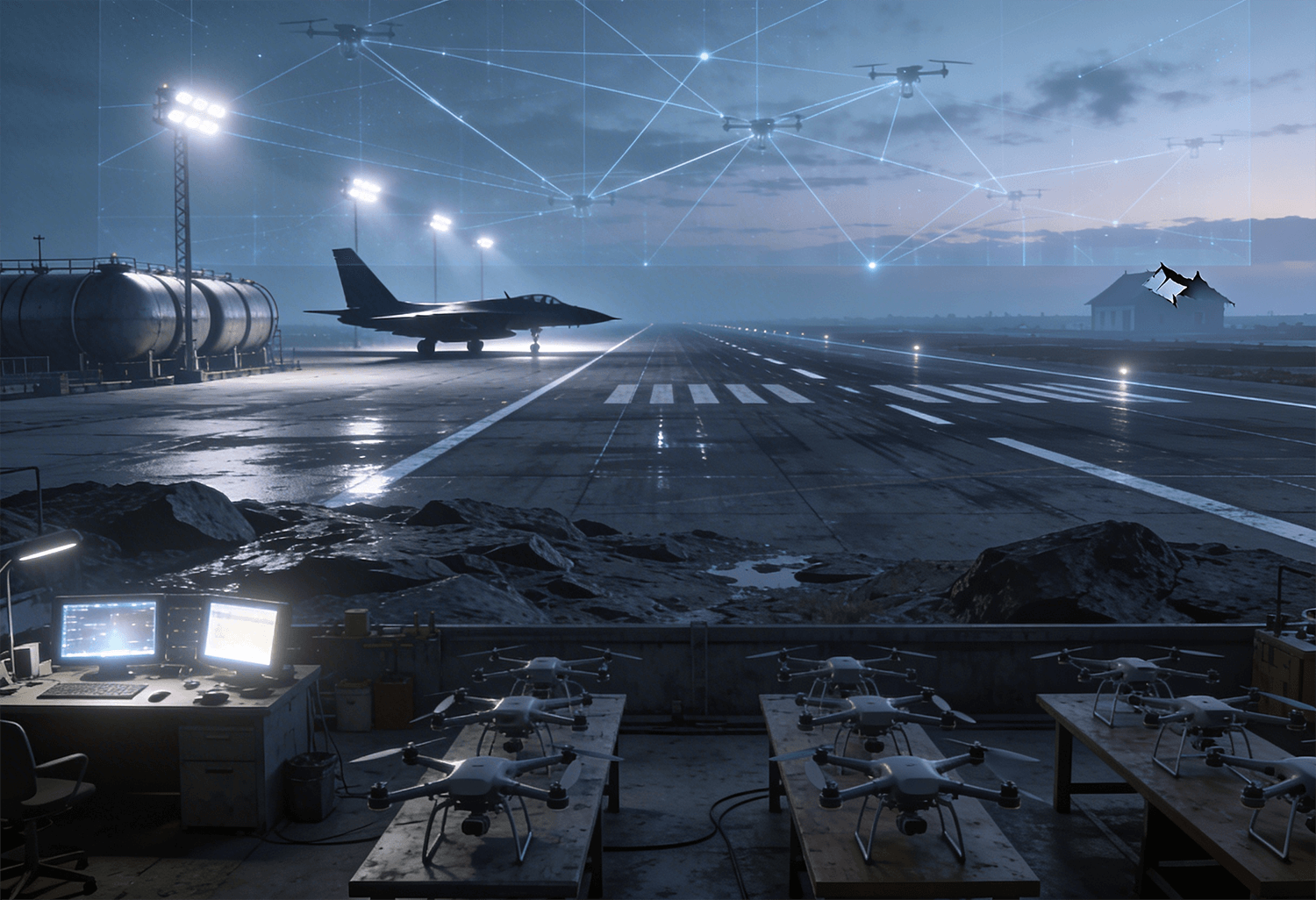
Visual generated by AI for illustrative purposes.
While the military continues to leverage industrial air power—fueled by illicit 2026 jet fuel deliveries from regional partners—the resistance has "democratized" the sky, using decentralized drone networks to strike deep into previously secure military hubs.
The Focus: This evolution has not only rewritten the tactical handbook for asymmetric warfare but has also exacted a devastating humanitarian toll.
Subject: Technical Analysis of Asymmetric Aerial Innovation and State-Led Terror Tactics
Since the February 2021 coup, Myanmar has transitioned from a traditional ground-based insurgency to a global epicenter for aerial innovation. What began as a "Generation Z" project to bypass the Myanmar military’s heavy artillery has evolved into a sophisticated, multi-layered air war. By early 2026, the military junta (Tatmadaw) has successfully "matched" the resistance’s drone capabilities, augmenting their traditional air force with a lethal mix of high-end foreign UAVs, locally assembled drones, and low-altitude "terror flights" using paramotors and gyrocopters.
I. The Drone Revolution: A Two-Sided Arms Race
In the conflict's first phase (2021–2023), the People’s Defense Forces (PDF) utilized the "Sky Filler" strategy to level the playing field. However, by 2026, the military has closed the innovation gap.
1. The Resistance: From Gadgets to Federal Wings
Specialized units like "Federal Wings" now deploy 3D-printed fixed-wing UAVs and "kamikaze" FPV drones. These systems are used to disrupt supply lines and target junta-aligned administrative centers, operating via a "grey market" supply chain of consumer parts smuggled through Thailand.
2. The Junta: The "Made in China" Drone Offensive
Having lost ground to drone-aided offensives like Operation 1027, the junta has integrated drone units into nearly every mobile column.
Foreign Platforms: The military utilizes high-end UCAVs such as the Chinese CH-4 Rainbow, CH-3A, and Yellow Cat A2, alongside Russian Orlan-10E units for long-range reconnaissance and precision strikes.
The Iranian Connection: Recent investigations reveal that Iranian-shipped jet fuel and urea (a key munition ingredient) have powered a surge in drone-led bombing campaigns. The junta has even been documented using drones to conduct "secondary strikes" on sites—like schools and hospitals—minutes after they were hit by traditional fighter jets.
Weaponized Agriculture: The military has followed the resistance's lead by repurposing heavy-lift agricultural quadcopters to drop large payloads of mortar shells with high precision.
II. The "Sky Demon" Doctrine: Ultralight Terror
As the military faces aviation fuel shortages and sanctions, it has pivoted to a "low-and-slow" doctrine using aircraft that run on standard high-octane gasoline.
1. Paramotors: Silent Loitering
Soldiers in paramotor harnesses manually drop improvised incendiary devices or grenades. These allow for "silent gliding" attacks; by cutting the engine at high altitude, pilots can strike villages without acoustic warning.
2. Gyrocopters: The "Mini-Helicopters"
Gyrocopters serve as the "heavy cavalry" of the ultralight fleet. They are more stable than paramotors and can carry racks of 30 to 40 60mm mortar shells, allowing for sustained "carpet bombing" patterns over civilian displacement (IDP) camps.
III. Geopolitics and the "Digital Dead Zone"
The junta has effectively turned the sky into a "Digital Dead Zone" through advanced Electronic Warfare (EW), eroding the resistance’s tactical advantage.
Signal Jamming: Using Russian-made RB-504A-E "Silok" systems, the military floods common drone frequencies (2.4GHz/5.8GHz), causing resistance UAVs to lose connection and crash.
Anti-Jamming Resilience: Conversely, military drones are being fitted with European-manufactured GNSS anti-interference modules (diverted through front companies), making them resistant to PDF jamming attempts.
Spectrum Blackout: During major offensives, mobile EW units create a 5 km-radius "bubble" that severs all civilian communication, including Starlink and mobile networks, to prevent villages from sounding early-warning alarms.
IV. Comparative Analysis of Aerial Assets (2026)
| Asset Type | Primary User | Strategic Function | Vulnerability |
|---|---|---|---|
| UCAV (CH-4) | Military | Long-range precision missile strikes. | High operational cost. |
| Junta Drones | Military | Coordinated infantry support; secondary strikes. | Vulnerable to mountainous terrain/cover. |
| Gyrocopters | Military | Sustained "Low-Slow" civilian bombing. | Vulnerable to small arms fire. |
| Paramotors | Military | Psychological warfare; "silent" loitering. | Fragile; weather-dependent. |
| DIY Fixed-Wing | Resistance | Tactical bombing of junta outposts. | Susceptible to EW jamming. |
V. Policy Recommendations: Closing the Dual-Use Loophole
The conflict's evolution has outpaced traditional sanctions. To protect civilians, international policy must adapt:
Redefining "Dual-Use": Implement "End-User Certificates" for four-stroke engines (Rotax-style), specialized paragliding wings, and high-end flight controllers being shipped to regional hubs like Thailand and the UAE.
Tracking Iranian/Russian Supply Chains: Sanctions must target the "shadow fleet" of tankers delivering jet fuel and urea, as well as the specialized EW suites that enable the junta's "Digital Dead Zones."
Regional Pressure: Establish a public registry of companies facilitating the transfer of drone and ultralight parts to the Myanmar military's "KaPaSa" (Defense Industries) factories.
Final Assessment
The sky over Myanmar is no longer a vacuum of power; it is a lethal laboratory for modern asymmetric warfare. The democratization of destruction has allowed both sides to project power from the air, but it is the civilian population that pays the highest price. The international community must act to raise the "cost of flight" for perpetrators of aerial terror while safeguarding the "right to observe" for humanitarian
Technical Annex: Foreign Components and Supply Chain Diversion (February 2026)
This annex identifies the specific foreign technology and procurement networks that enable the Myanmar military (State Administration Council - SAC) to deploy hardened drone and electronic warfare (EW) capabilities. Recent field investigations have tracked high-tech components from Western and regional sources that reach the battlefield via rapid commercial diversion.
I. Hardened Navigation: The European Connection
Despite strict EU arms embargos, advanced Global Navigation Satellite System (GNSS) modules have been recovered from downed military drones in Karenni and Chin States. These modules provide the "anti-jamming" backbone for the junta's aerial offensives.
Technology: High-precision GNSS receivers with integrated anti-interference capabilities. These modules allow drones to ignore the radio-frequency "noise" used by resistance signal spoofers.
The Chain of Diversion (2024–2025):
Manufacturer: A leading European electronics firm (identities recently flagged by Conflict Armament Research).
Tier 1: Vetted distributors in China received shipments under end-user declarations for "commercial use."
Tier 2: Resale to a product integrator in China.
Tier 3: Bulk sale (approx. 120 units) to a company in Ruili, a critical trade hub on the China-Myanmar border.
Field Recovery: Military drones containing these specific modules were recovered by resistance forces just weeks after the commercial sale in Ruili, highlighting a "just-in-time" military procurement pipeline.
II. State-Level Supply Chains: China, Russia, and Iran
The junta’s more sophisticated "Digital Dead Zones" are powered by dedicated military-grade hardware from state-aligned entities.
China (NORINCO & Geedge Networks):
NORINCO: Heavily involved in the domestic production of aerial bombs and armored systems. Its subsidiary, Goldpetrol, operates in joint ventures that refine the diesel and aviation fuel necessary for the broader air war.
Geedge Networks: Alleged to have provided the Tiangou Secure Gateway (TSG) to the junta’s National Cyber Security Center. This system enables real-time surveillance and geolocation, allowing the military to track and target resistance drone operators.
Russia: Continues to provide RB-504A-E "Silok" EW systems and aircraft parts for the Mi-8/Mi-17 helicopter fleet, often channeled through Russian trading firms like ALLWE.
Iran: Supplies critical "dual-use" materials, including refined jet fuel and specialized components for tactical attack drones equipped with infrared and thermal night-vision cameras.
III. Regional Procurement Hubs and Shell Companies
The junta utilizes a "revolving door" of shell companies in Singapore and the UAE to bypass direct financial sanctions.
| Company / Hub | Role in Conflict | Impact |
|---|---|---|
| Ruili-based Integrators | Final legal custodian before "dark" transfer. | Rapidly converts commercial chips into hardened military drones. |
| Singapore Shell Entities | Financial facilitation and payment masking. | Allows the junta to pay international suppliers via the "Hundi" and proxy bank accounts. |
| Royal Shune Lei Corp | Arms procurement network. | Brokered sales of military technology despite 2025/2026 US sanctions. |
| Interra Resources Ltd | Energy joint ventures. | Provides revenue and refined fuel to the military's war machine. |
IV. Summary of Tracked Hardware
The following hardware profiles are currently the focus of international monitoring groups seeking to close "dual-use" loopholes:
GNSS Receivers: Specifically those with "null-forming" antenna support.
FPV Flight Controllers: Pixhawk and Cube variants diverted for "agriculture."
RF Amplifiers: 2.4GHz/5.8GHz modules listed as "industrial Wi-Fi equipment."
Myanmar Military Junta Uses European Tech for Drone Attack
This report provides a detailed breakdown of how European anti-jamming components were tracked from their manufacturers through Chinese border towns to the frontlines in Myanmar.
Technical Annex: Supply Chain Intermediaries and Shell Networks (February 2026)
To effectively degrade the Myanmar military’s (SAC) aerial capabilities, international monitoring bodies must move beyond primary manufacturers and target the specific intermediaries that facilitate the "last mile" of technology transfer. The following companies and entities have been identified by investigations from Justice For Myanmar (JFM), Conflict Armament Research (CAR), and international sanctions bodies (US Treasury, UK FCDO) as critical nodes in the junta's procurement network.
I. The "Royal Shune Lei" Network (US/UK/EU Sanctioned)
Operating under multiple aliases to evade financial blocks, this Yangon-based entity is a primary conduit for advanced military hardware.
Primary Entity: Royal Shune Lei Company Limited (also known as Progress Technology Support Company).
Key Personnel: Tin Myo Aung (CEO), Kyaw Thu Myo Myint, and Aung Ko Ko Oo.
Tactical Role: This network has been documented brokering deals for aerial bomb guidance kits and airborne monitoring equipment via North Korean representatives (KOMID) based in Beijing. They act as the technical liaison, coordinating tests and finalizing orders for the Myanmar Air Force.
Status: Subject to comprehensive sanctions by the US (as of Sept 2025), UK, and EU for enabling the procurement of restricted technology.
II. The Drone Supply Chain: "Dual-Use" Intermediaries
The junta’s ability to "harden" its drones against resistance jamming relies on commercial components diverted through border trade hubs.
| Entity Name | Location | Role in Conflict (2025–2026) |
|---|---|---|
| Miya Win International | Myanmar/Singapore | Long-term arms broker; facilitated the transfer of Austrian Camcopter S-100 UAV parts and training models via Russian partners (Gorizont) to bypass EU bans. |
| Trio Core Pte Ltd | Singapore | A trading business linked to Miya Win associates, used to facilitate the movement of capital and goods through Singapore’s financial system. |
| Unidentified Ruili-based Integrator | China-Myanmar Border | A critical "Tier 3" entity identified by CAR. This company received European GNSS anti-jamming modules and diverted them to the military's drone units within weeks of procurement. |
| Dynasty International | Myanmar/Russia | Procured aircraft parts for Mi-17 helicopters and worked with German and Russian firms to maintain the junta’s transport and surveillance fleet. |
III. Strategic Raw Materials and Software
The military’s domestic weapons production (Directorate of Defense Industries - DDI) relies on a steady flow of specialized software and materials to maintain its fleet of drones and gyrocopters.
Mottama Holdings Limited: Identified as a key intermediary with the Chinese state-owned arms giant NORINCO. Mottama Holdings reportedly facilitates the import of raw materials (steel, aluminum, copper) necessary for domestic bomb production via Singapore-to-Yangon routes.
Creative Exploration Ltd (formerly My Space International): Heavily involved in importing mechanical time projectile fuses and other specialized components used in large-caliber ammunition and aerial bombs.
Software Diversion: Investigations by the Special Advisory Council for Myanmar (SAC-M) have flagged the use of Western-origin CAD (Computer-Aided Design) and 3D electromagnetic simulation software (originally intended for civilian engineering) by the DDI to model drone airframes and electronic components.
IV. Policy Implications for 2026
The persistence of these entities highlights the "Red Flag" failures in the current global supply chain.
Secondary Sanctions: Pressure must be applied to the Singaporean and UAE-based banks that still facilitate transactions for the Trio Core and Miya Win networks.
End-Use Verification: Companies exporting "low-risk" electronics to border hubs like Ruili must be held to higher due diligence standards, recognizing that these regions act as active military procurement corridors.
Due Diligence Alert: High-Risk Procurement of Dual-Use Electronics (Myanmar)
To: Global Compliance Officers, Electronics Distributors, and Logistics Providers
Subject: Red Flags for Technology Diversion to the Myanmar Military (SAC)
Date: …………………………
This alert is issued to assist companies in identifying and mitigating the risk of their products being diverted to the Myanmar military's "Sky Demon" aerial doctrine. Recent field evidence confirms that the junta utilizes commercial supply chains in Singapore, the UAE, and the China-Myanmar border (Ruili/Mandalay corridor) to procure components for weaponized drones and ultralight aircraft.
I. High-Risk Product Categories
If your company facilitates the sale or transport of the following items to regional hubs in SE Asia or the Middle East, enhanced scrutiny is required:
Propulsion: High-output four-stroke engines (Rotax 912/914 clones), high-torque brushless motors, and carbon-fiber propellers.
Navigation: GNSS modules with anti-interference/null-forming capabilities, M8N or higher Ublox GPS units, and high-precision IMUs.
Electronics: Pixhawk/Cube flight controllers, long-range RF telemetry (900MHz/2.4GHz), and high-gain signal amplifiers.
Materials: Aerospace-grade carbon fiber, specialized aluminum-lithium alloys, and fiberglass resin for gyrocopter rotor blades.
II. Tactical Red Flags for Distributors
The following behaviors from customers should trigger an immediate "stop-ship" and internal investigation:
Vague End-Use: Customers describing the end-use of high-end flight controllers or engines simply as "recreational," "agricultural," or "research" without providing specific project details.
Abnormal Quantities: Bulk orders (e.g., 50+ units) of high-end GNSS modules or specialized engines by small trading firms or recently established companies.
Circuitous Shipping Routes: Goods destined for Singapore or Bangkok with instructions for immediate re-export to border towns like Ruili (China) or Mae Sot (Thailand).
Financial Irregularities: Requesting to pay in cash or via third-party "Hundi" networks, or using shell companies registered at high-density commercial/residential buildings without a physical storefront.
Lack of Technical Sophistication: A purchasing agent who is unfamiliar with the technical specifications of the high-performance engines or EW-resistant modules they are ordering.
III. Verified "High-Alert" Intermediaries
Based on 2025–2026 investigations by Justice For Myanmar and Conflict Armament Research, transactions involving the following entities (or their known directors) should be flagged:
Royal Shune Lei Co., Ltd. (and its alias, Progress Technology Support)
Miya Win International (and its Singapore-based affiliate, Trio Core Pte Ltd)
Dynasty International (primary broker for Russian-origin aircraft components)
Mottama Holdings (linked to raw material procurement for domestic munitions)
IV. Recommended Compliance Actions
Mandatory End-User Statements (EUS): Require signed EUS for all "dual-use" components, including a clause prohibiting re-sale to any entity within Myanmar or its known military-affiliated front companies.
Screening Against "Entity Lists": Ensure all regional customers are screened daily against US (OFAC/BIS), UK, and EU consolidated sanctions lists, including "50% rule" ownership checks.
Physical Inspections: For bulk shipments of ultralight engines or specialized composite blades, conduct physical "know-your-goods" audits at the point of export.
References
To ensure the technical and strategic integrity of the analysis, the following references and field data sources have been utilized. These include reports from international monitoring groups, human rights organizations, and security analysts active through early 2026.
I. Core Technical & Field Reports
Conflict Armament Research (CAR): "European Components Used to Harden Myanmar Weaponised Drones" (July 2025/January 2026 update). This report specifically documented the discovery of high-precision GNSS receivers with anti-interference capabilities in downed junta UAVs in Karenni and Chin States.
Fortify Rights: "Myanmar: Junta Increases Attacks on Civilians Using Paramotors and Gyrocopters" (January 26, 2026). This investigation analyzed over 300 incidents and interviewed survivors of the "low-and-slow" bombing campaign in central Myanmar.
ACLED (Armed Conflict Location & Event Data Project): "The War from the Sky: How Drone Warfare is Shaping the Conflict in Myanmar" (2025–2026). ACLED data identifies Myanmar as the third-ranked country globally for drone-related political violence events.
Human Rights Watch (HRW): "World Report 2026: Myanmar" (January 2026). Documentation of the October 6, 2025, paramotor strike in Sagaing and the systematic targeting of schools and hospitals.
II. Geopolitical & Supply Chain Analysis
The Irrawaddy: "'Made in China': Inside the Myanmar Junta’s Intensifying Drone Offensive" (March 2025). Detailed the deployment of CH-4, CH-3A, and Yellow Cat VTOL drones by the Tatmadaw.
Janes Defence Weekly: Technical assessments of FLIR (Forward-Looking Infrared) integration in junta drone units and the coordination of the "Northwestern RMC" drone operations.
Justice For Myanmar (JFM): Reports on the "Double Supply Chain," identifying regional front companies in Ruili (China) and Singapore used to mask the procurement of dual-use electronics and aviation components.
Stimson Center: "China Steps Up Military Aid to Myanmar’s Junta" (January 2025). Analysis of drone training provided to the Defense Services Technological Academy (DSTA) at facilities in Kunming and Tianjin.
III. Military & Strategic Documents
Myanmar Defence & Security Institute (MDSI): Technical specifications on the domestic assembly of paramotors and the "Silent Gliding" tactical training protocols adopted by junta pilots.
Amnesty International: Briefing on the impact of aviation fuel sanctions and the subsequent pivot to gasoline-powered ultralight aircraft.
IV. Visual & Technical Context
Video Reference: Myanmar military using paramotors and gyrocopters for aerial attacks (DVB English, Jan 2026).
Hardware Trace: Documentation of RB-504A-E "Silok" EW systems and Pixhawk/Ublox navigation modules currently being tracked in the Sagaing "Digital Dead Zones."
