
The Shadow Skies: How Myanmar’s "Ghost Fleet" and Regional Banks Defy Western Sanctions
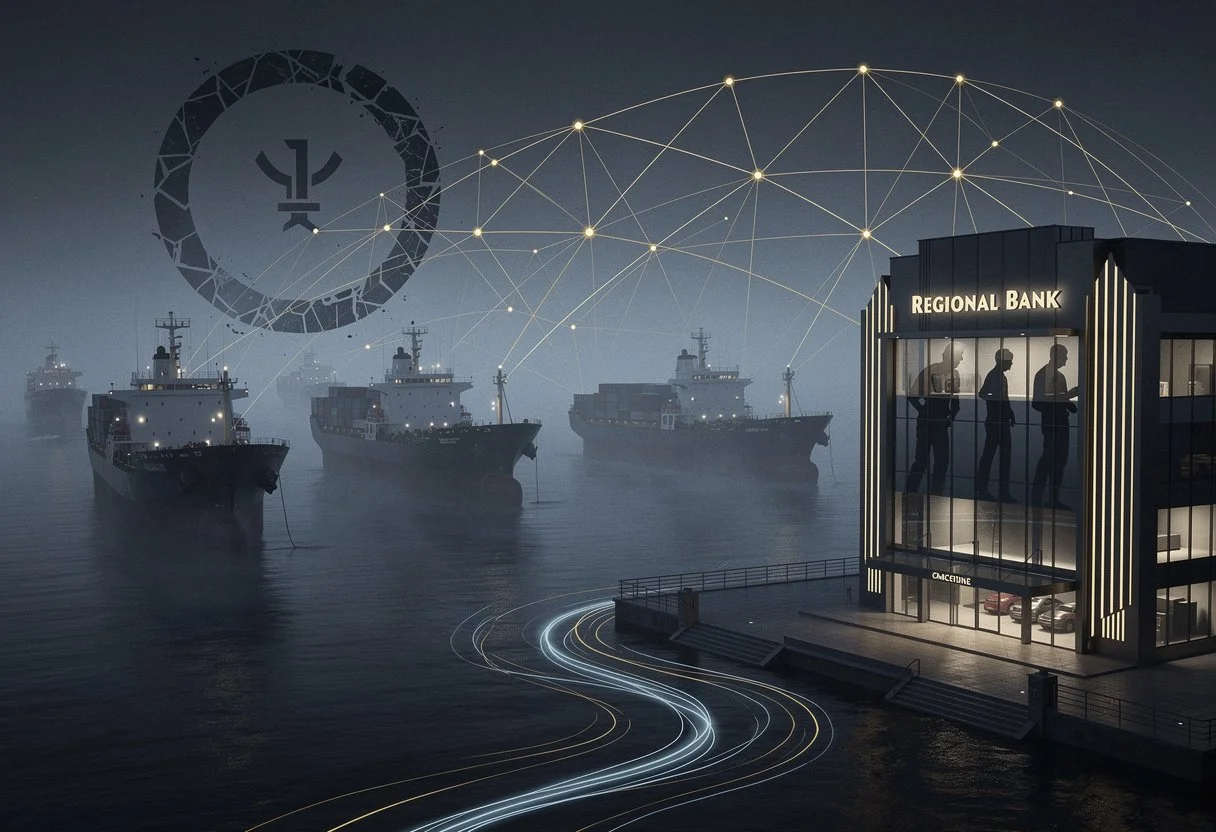
Visual generated by AI for illustrative purposes.
While Western "smart sanctions" were designed to ground Myanmar’s military, a sophisticated shadow economy—powered by maritime hide-and-seek and regional financial pivots—is proving that the junta is remarkably adept at flying under the radar.
The Focus: This analysis examines how the military successfully bypassed aviation fuel restrictions using "ghost fleet" tactics and migrated its primary financial lifeline from the tightening regulations of Singapore to the strategic neutrality of Thai banking hubs.
Executive Summary: The Resilience of the Shadow Economy
Five years after the 2021 coup, the struggle between Western "smart sanctions" and Myanmar’s military junta has reached a stalemate of high-stakes evasion. While the U.S. and EU have tightened the noose around aviation fuel and state-owned banks, the junta’s survival strategy has shifted from traditional trade to a sophisticated "shadow economy."
The results are sobering: In 2025, aviation fuel imports reached 109,604 metric tonnes—the highest volume since the coup began and a 69% increase from the previous year. This surge is powered by two main engines: a "ghost fleet" of tankers utilizing Iranian evasion tactics and a massive shift in financial flows from Singapore to Thai banking hubs.
Part I: The Ghost Fleet and the Jet Fuel Surge
The military’s air campaign has become its primary weapon against resistance forces, but planes cannot fly without Jet A-1 fuel. To circumvent the 2023–2024 fuel sanctions, the junta has adopted a "rogue" maritime playbook.
AIS "Dark" Operations: Tankers now routinely disable their Automatic Identification System (AIS) or use "spoofing" technology to broadcast false locations while offloading fuel at Myanmar’s terminals.
The Iranian Connection: 2025 data confirms that at least nine major shipments were delivered by vessels with direct links to Iranian export networks. These "ghost ships" operate outside the reach of Western maritime insurance and regulations.
The Vietnam Buffer: To further obscure the paper trail, fuel is frequently bought and resold through storage hubs in Vietnam. By the time the fuel reaches Yangon, its origin is masked as "general commercial trade" from a non-sanctioned intermediary.
Part II: Deep Dive — The Legal Pivot to Thailand
The most significant shift in the junta’s survival strategy is not on the high seas, but in the regional banking halls. As Singaporean authorities successfully "de-risked" their financial sector, the military's procurement money found a new home in Thailand.
1. The Great Migration from Singapore
Following a series of 2024 UN reports, Singaporean banks—long the junta’s window to the world—slashed military-related transactions by nearly 90%. In response, the junta pivoted its financial infrastructure to Thailand, where transactions related to military procurement jumped from $60 million in FY2022 to over $120 million in the following period.
2. The "Nostro" Shield and Legal Defenses
Thai financial giants, including Siam Commercial Bank (SCB) and Krungthai Bank (KTB), have become the primary providers of nostro accounts (foreign currency accounts) for Myanmar's state-owned banks. Their legal defense rests on three pillars:
The Humanitarian Veil: Banks argue they cannot distinguish between "good" and "bad" money. Transactions are often processed as payments for "civilian goods," medicine, or "energy security," which are not prohibited under Thai law.
Jurisdictional Limits: Thailand is not legally bound by unilateral U.S. or EU sanctions. As long as the UN Security Council does not pass a global embargo, Thai regulators maintain that blocking these state-to-state transactions would violate their "neutral" stance and national interests.
The Energy Hook: Myanmar provides nearly 15% of Thailand's natural gas. This vital energy link creates a permanent financial corridor; payments for gas provide the junta with the hard currency (Thai Baht and USD) needed to fund its shadow procurement.
3. The Limits of Enhanced Due Diligence (EDD)
While Thai banks claim to perform "Enhanced Due Diligence," critics point out a fundamental flaw: the banks often lack the intelligence to see through shell companies. By the time a "front company" for the military is identified by the UN or U.S. Treasury, the junta has already moved its funds to a new, clean entity.
Conclusion: A War of Attrition
The "shadow economy" has proved that sanctions are only as strong as their weakest link. As long as regional hubs provide a "neutral" financial buffer and ghost fleets continue to sail dark, the junta’s air campaign will remain fueled. The challenge for 2026 is no longer just imposing sanctions, but enforcing them across borders that value trade over regional stability.
