
The Erasure of History and the Path to Institutional Redemption
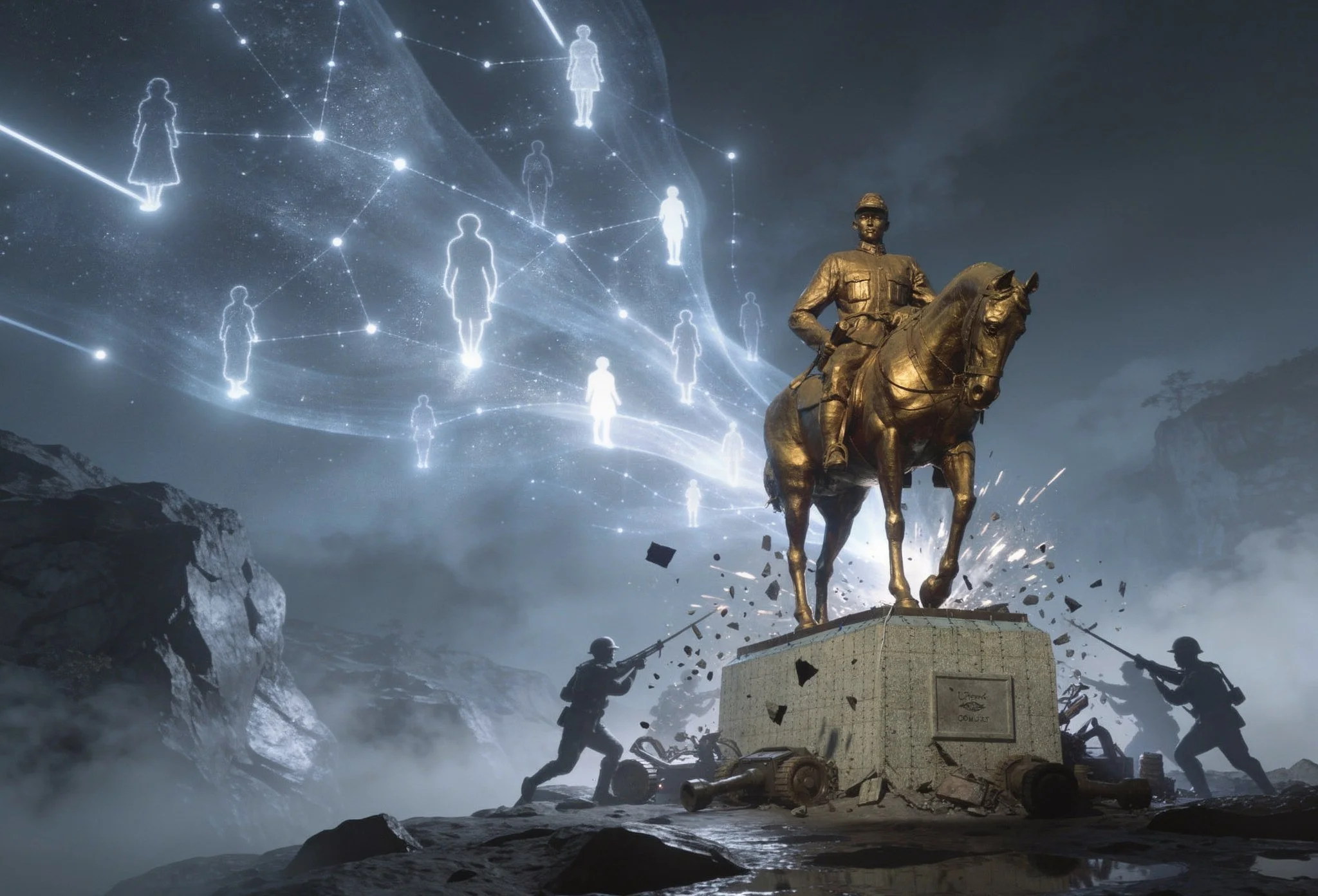
Visual generated by AI for illustrative purposes.
In the theatre of authoritarian politics, history is often treated not as an immutable record of the past, but as a malleable instrument of the present. For decades, a defining characteristic of dictatorial regimes—most visibly exemplified in Myanmar’s turbulent political trajectory—has been the systematic attempt to rewrite, re-control, and reshape historical narratives. The objective is always the same: to legitimise and consolidate contemporary holds on power.
Yet, as recent political discourse highlights, true history possesses a stubborn resilience. It cannot be dismantled like an old administrative building, pulled down like a bronze statue, or replaced like an outdated signboard. History lives dynamically within the populace; it is the sum of a society’s collective memory, its shared political scars, and the lived experiences quietly passed down from one generation to the next.
For an institution seeking redemption and the restoration of public trust, acknowledging this reality is not a sign of weakness. Rather, it is the foundational step toward national reconciliation.
The Imperative of Demilitarising Politics
A core systemic vulnerability for any nation occurs when its armed forces overstep their constitutional boundaries. When a military wields and manipulates political power—whether through direct governance or via biased alignment with proxy political parties—it inevitably forfeits its status as a unifying national symbol. Instead, it degrades into a deeply polarising and controversial faction.
A Lesson from Successful Nations
Globally, stable and prosperous countries demonstrate that even if extreme circumstances temporarily force a military to intervene in state affairs, it must treat that power as strictly provisional and exit the political arena as swiftly as possible.
In robust democracies, the blueprint is clear: the military’s primary mandate is strictly confined to national defence, operating entirely under the civilian control of an elected government. It is only under this civilian supremacy that citizens can stop viewing the military as the armed wing of a specific political clique and begin viewing it once more as an honourable national institution.
Mending the Fractured Trust of Ethnic Minorities
In multi-ethnic states like Myanmar, the crisis of military legitimacy is compounded by a secondary, equally volatile fracture: the deep-seated mistrust between the armed forces and regional ethnic nationalities. This goes far beyond general civil-military friction; it is a wound born of long-term systemic friction.
| The Pillars of Image Reconstruction | The Consequences of Neglect |
|---|---|
| Acknowledgment of historical pain from years of oppression. | Deepening alienation of ethnic borderlands. |
| Genuine Dialogue over unilateral decrees. | Protracted internal conflict and instability. |
| Political Solutions over military enforcement. | Permanent loss of institutional legitimacy. |
Any institutional public relations campaign aimed at restoring a "good image" will fundamentally fail unless it directly addresses the historical trauma of conflict and war. True stability cannot be forced through the barrel of a gun; it must be negotiated through authentic political settlements.
Reclaiming Dignity in the Contemporary Era
Ultimately, contemporary history offers a blunt lesson regarding institutional prestige: true dignity flows from public trust, never from raw power.
Throughout global history, the militaries that have commanded genuine, enduring respect from their citizens were rarely the ones with the most overwhelming firepower or the most absolute political control. They were the militaries that successfully protected the lives, property, and liberties of their people while remaining strictly subordinate to the rule of law.
Respect extracted through fear and brute force is an illusion—ephemeral and highly volatile. Conversely, dignity built upon a foundation of mutual trust and adherence to legal boundaries is durable.
Conclusion: Facing the Past to Secure the Future
For a military looking to rebuild its fractured reputation, the path forward requires a stark choice. It demands a shift away from the instinct to conceal or erase the historical record, moving instead toward a willingness to learn from it.
The road to long-term institutional dignity cannot be paved with historical revisionism. It can only be achieved by facing the past with courage, prioritising the collective national interest over narrow political power, and actively choosing to build civilian trust rather than relying on the enforcement of fear.
