
Cluster Munitions and "Indiscriminate" Aerial Terror
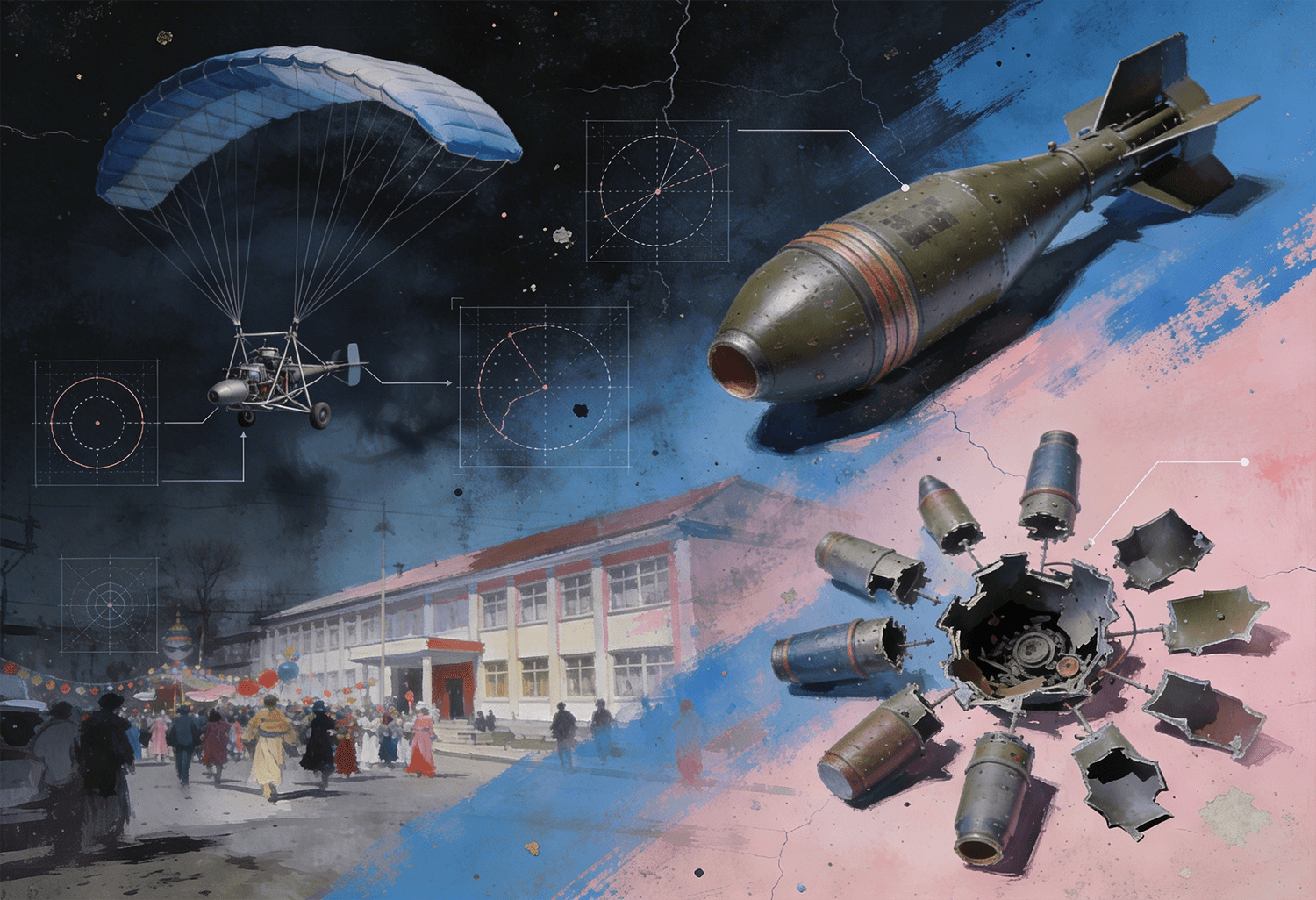
Visual generated by AI for illustrative purposes
Key Takeaways
Low-Cost Aerial Terror: Myanmar's military increasingly deploys ultralight paramotors and gyrocopters to launch silent, low-altitude bombing attacks on civilian targets.
Mass Casualties: Over 304 ultralight strikes were recorded between late 2024 and early 2026, including a school festival attack that killed 24 people.
Targeting Infrastructure: Domestically produced cluster bombs and direct airstrikes have targeted soft zones, including a hospital attack that killed over 30 patients and staff.
Evasion & Intimidation: Aviation fuel imports rose 69% in 2025 via maritime location spoofing to maintain aerial dominance and intimidate voters during elections.
Estimated Reading Time: 1 minute
The escalating conflict in Myanmar throughout 2025 and early 2026 has been marked by a transition toward "low-cost" aerial terror. Organisations such as Amnesty International, Fortify Rights, and Human Rights Watch have documented a significant surge in the use of domestically produced cluster munitions and a new tactic: paramotor-led bombings targeting "soft" civilian infrastructure.
1. The Paramotor Surge (2025–2026)
In 2025, the Myanmar military (Tatmadaw) introduced paramotors and gyrocopters as a cost-effective alternative to expensive jet fighters. These ultralight aircraft allow for slow, low-altitude flights that are difficult for traditional radar to track.
Tactical Execution: Pilots often turn off their engines as they approach a target, gliding silently over schools or festivals before dropping unguided mortars or improvised bombs.
The Thadingyut Massacre (Oct 6, 2025): In one of the deadliest examples, a paramotor attacked a candlelighting festival at a primary school in Chaung U, Sagaing Region. The strike killed at least 24 civilians, including three children, who were simultaneously celebrating the end of Buddhist Lent and protesting the 2025 elections.
Incident Volume: Between December 2024 and January 2026, monitors recorded over 304 incidents involving paramotor and gyrocopter strikes, with a steep escalation during the multi-phase election period (December 2025 – January 2026).
2. Cluster Munition "Indiscriminate" Terror
Despite international bans, Myanmar remains one of the few nations actively producing and deploying cluster munitions.
Domestic Production: Since 2022, the military has utilised its own defence industry to produce cluster bombs (likely the 240kg 120-submunition variety).
Case Study: Paing Yat Village (June 9, 2025): Domestic cluster munitions were used in an attack on a school in Karen State, killing six. The wide dispersal pattern of these weapons makes them inherently indiscriminate, ensuring maximum casualties in densely populated "soft" zones like schools and displacement camps.
3. Targeting Healthcare: The Mrauk-U Hospital Strike
The targeting of "soft" infrastructure reached a peak with the destruction of the Mrauk-U General Hospital in Rakhine State on December 10, 2025.
FeatureDetailsDate/TimeDecember 10, 2025, at 21:13 MMT Fatalities: 33–35 (including 17 males, 16 females; many were children) Injured: 70–80+ patients and staff Impact: The 300-bed facility was destroyed, including the operating theatre and wards.
"Bombing of health facilities, patients being killed in their beds... this cannot be perceived as collateral damage." — Paul Brockmann, MSF Operations Manager
4. Technical & Logistic Drivers
Fuel Evasion: Despite sanctions, the military imported 109,604 metric tonnes of aviation fuel in 2025—a 69% increase from the previous year. This was achieved through "ghost ships" using AIS spoofing (broadcasting false locations) to hide their origins in countries like Iran.
Election Intimidation: The surge in aerial attacks coincided with the junta's "sham elections" (Dec 2025), used as a tool of state terror to clear contested areas and discourage opposition gatherings.
