
Fueling the Generals: How Myanmar’s Neighbors Are Helping Prolong Military Dictatorship
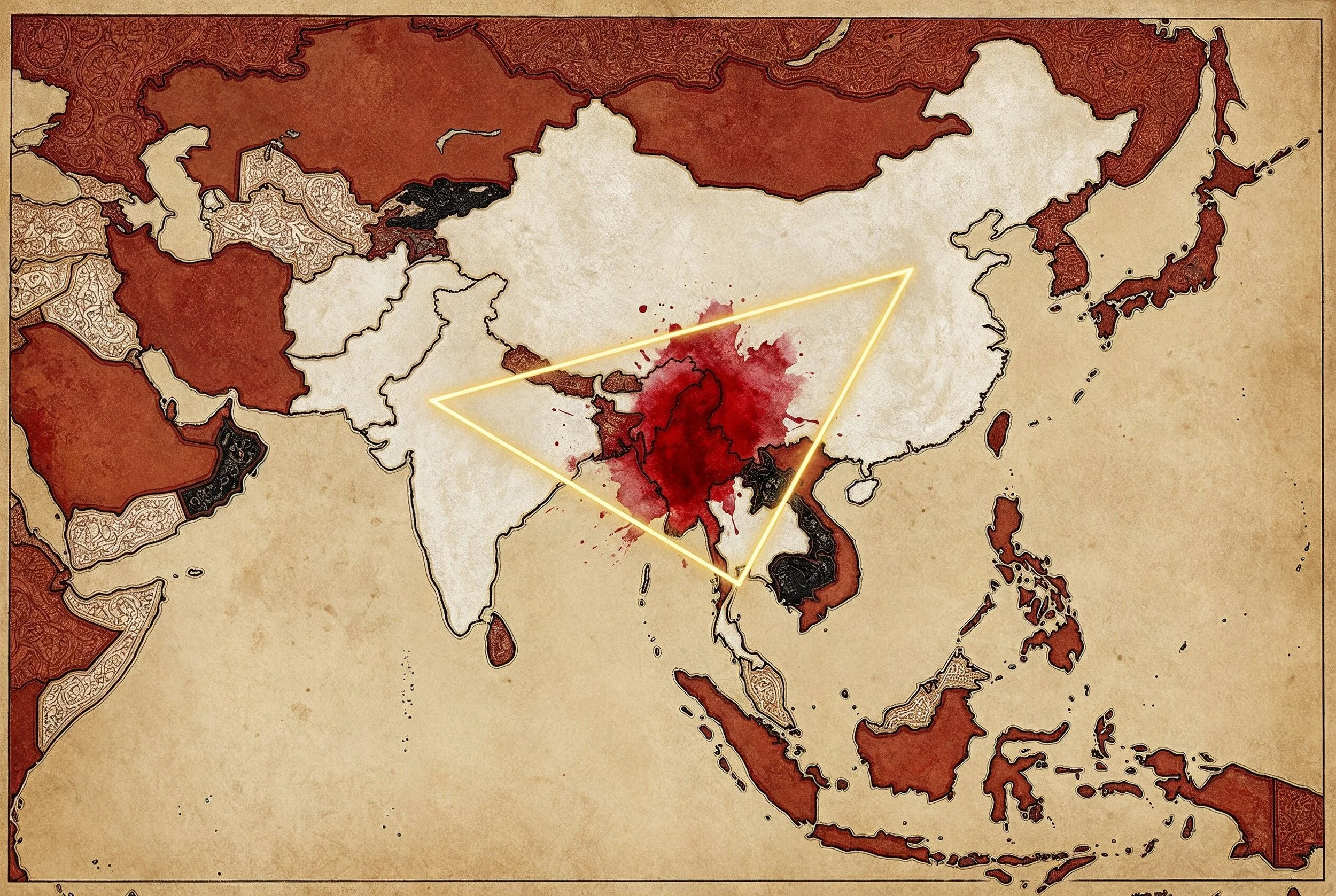
Visual generated by AI for illustrative purposes.
Key Takeaways
Neighbouring Support: Myanmar’s military junta maintains power through economic lifelines and diplomatic backing from neighbouring nations rather than popular legitimacy.
Funding Repression: Energy revenues—such as Thailand’s PTTEP gas ventures—directly finance the regime’s weapons, jet fuel, and campaign of violence.
Bypassing Sanctions: Direct payment systems (e.g., in Thai baht) help the military retain hard currency and evade international financial isolation.
Broader Regional Roles: China protects strategic infrastructure, India prioritises border security, and ASEAN relies on "non-interference," together creating a regional shield around the regime.
Profit Over People: Neighbouring governments prioritise gas contracts and trade over civilian lives, prolonging the dictatorship.
Estimated Reading Time: 2.5 minutes
Since Myanmar’s military coup in 2021, the junta has survived not because it enjoys legitimacy from the people, but because it continues to receive economic lifelines and political accommodation from neighbouring countries. Every village burned, every school bombed, and every civilian killed is not only the result of the junta’s brutality — it is also enabled by the governments and corporations that continue to do business with Myanmar’s military rulers.
According to reliable sources, during the second week of May 2026, representatives from Thailand’s PTTEP arrived in Nay Pyi Taw. Their visit served as yet another reminder that while Myanmar civilians continue to suffer under airstrikes and mass displacement, regional economic cooperation with the junta proceeds almost uninterrupted. Discussions reportedly focused on joint ventures for new offshore gas blocks and the expansion of direct payment systems in Thai baht. Myanmar’s Minister of Electricity openly expressed relief at having received billions of baht from PTTEP so far.
This is not ordinary commerce. In today’s Myanmar, every major financial deal with junta-controlled institutions carries profound political and moral consequences.
Myanmar’s offshore gas sector remains one of the military regime’s largest sources of foreign currency income. Revenues generated through state-controlled energy enterprises help fund the machinery of repression: jet fuel for airstrikes, weapons procurement, military salaries, surveillance systems, and the expansion of authoritarian control. When foreign companies continue investing in junta-linked projects, they are not operating in a neutral environment. They are helping sustain a regime accused of war crimes and crimes against humanity.
Thailand’s continued cooperation is particularly significant because it extends beyond energy extraction. The expansion of direct payment systems in Thai baht reduces reliance on international financial systems and weakens the impact of sanctions aimed at isolating the junta economically. In practice, these mechanisms help the military authorities maintain access to hard currency and financial stability at a time when democratic resistance groups and ordinary civilians are struggling to survive.
The contradiction is stark. On one hand, regional governments issue statements calling for peace, dialogue, and stability. On the other hand, they continue signing agreements, facilitating trade, and protecting investments that directly strengthen the military regime responsible for widespread violence.
Thailand is not alone.
China continues to maintain close strategic ties with the junta while protecting its infrastructure and economic corridor projects. India prioritises border security and regional connectivity initiatives. Several ASEAN governments avoid exerting meaningful pressure on the generals under the principle of “non-interference.” Together, these policies form a regional shield around Myanmar’s military rulers.
Neighbouring governments often defend their actions as pragmatic diplomacy. Thailand depends on Myanmar’s gas imports. China seeks stability for its investments. India worries about insurgencies along the border. ASEAN fears regional instability and refugee flows.
But stability built on the suffering of civilians is not peace.
The reality inside Myanmar is devastatingly clear. Airstrikes continue to kill children in schools and monasteries. Entire communities have been displaced. Journalists, activists, doctors, and teachers remain imprisoned, tortured, or executed. The military has lost public legitimacy across much of the country, yet it survives because it still controls revenue streams protected through regional cooperation.
For the people of Myanmar resisting dictatorship, this is no longer only a domestic struggle against military rule. It is also a struggle against the international networks that keep the junta economically alive.
History will remember not only the generals who ordered the bombings, but also the governments, corporations, and institutions that continued shaking hands with them while civilians were dying.
Myanmar’s neighbours now face a moral choice. They can continue prioritising gas contracts, border trade, and strategic interests over human lives — or they can recognise that genuine regional stability will never come from enabling military dictatorship.
As long as billions continue flowing into junta-controlled systems, the military’s campaign of violence will continue. And every new agreement signed in Nay Pyi Taw will deepen the belief among Myanmar civilians that the region has chosen business with generals over solidarity with the people.
