
Featured
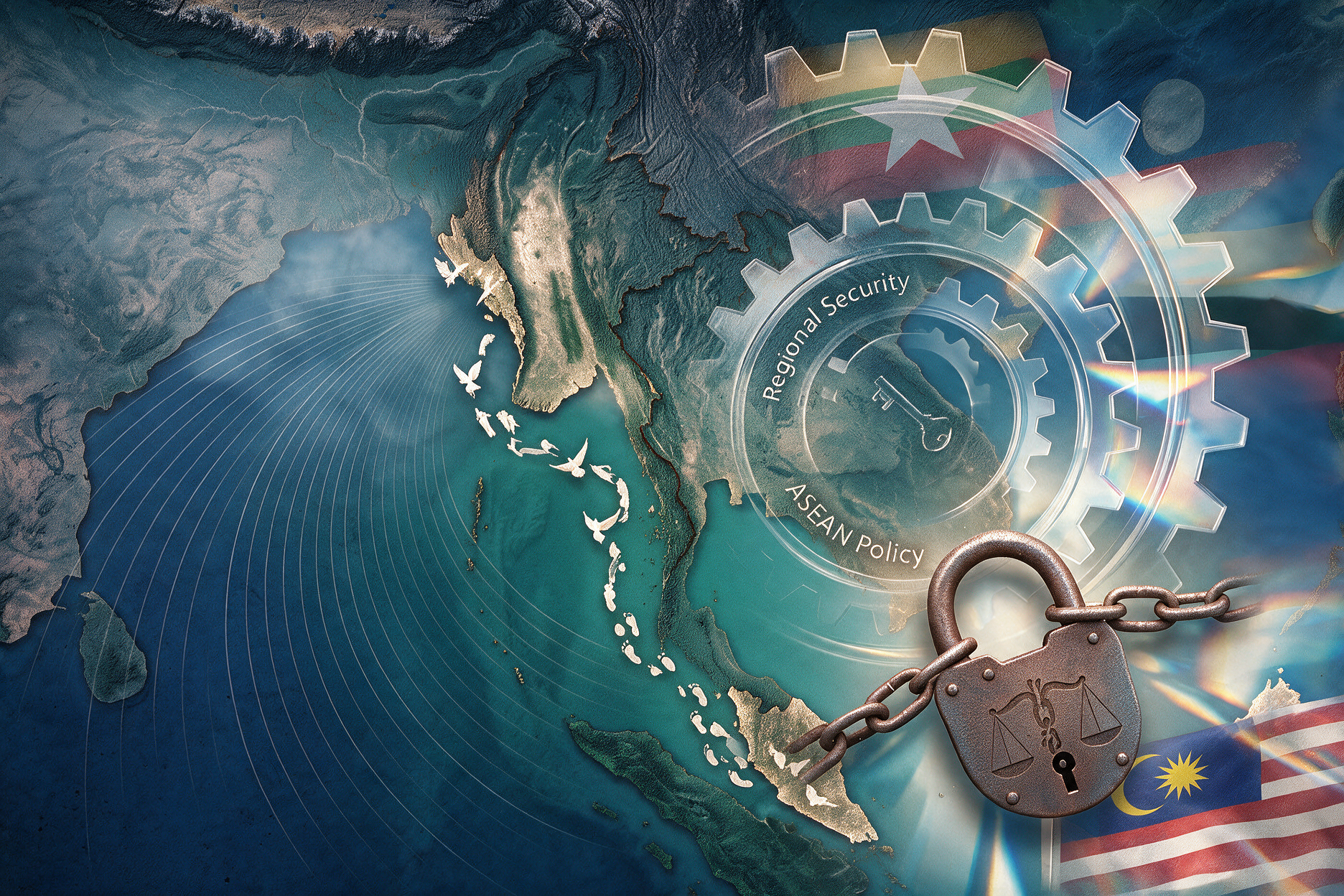
In the shadow of impending domestic elections, Malaysia’s abrupt shift toward bilateral repatriation talks with Myanmar’s military junta marks an alarming departure from its historic humanitarian advocacy. Prime Minister Anwar Ibrahim’s initiative to directly engage military leader Min Aung Hlaing over the phased return of roughly 200,000 Rohingya refugees prioritises short-term domestic political expedience at the expense of established regional norms. This approach threatens to dismantle ASEAN’s Five-Point Consensus by extending de facto diplomatic legitimacy to an internationally isolated regime currently facing genocide proceedings before the International Court of Justice. Crucially, engineering returns to an active war zone directly breaches the customary international law principle of non-refoulement, imperilling vulnerable refugees and fundamentally compromising Malaysia’s diplomatic standing.
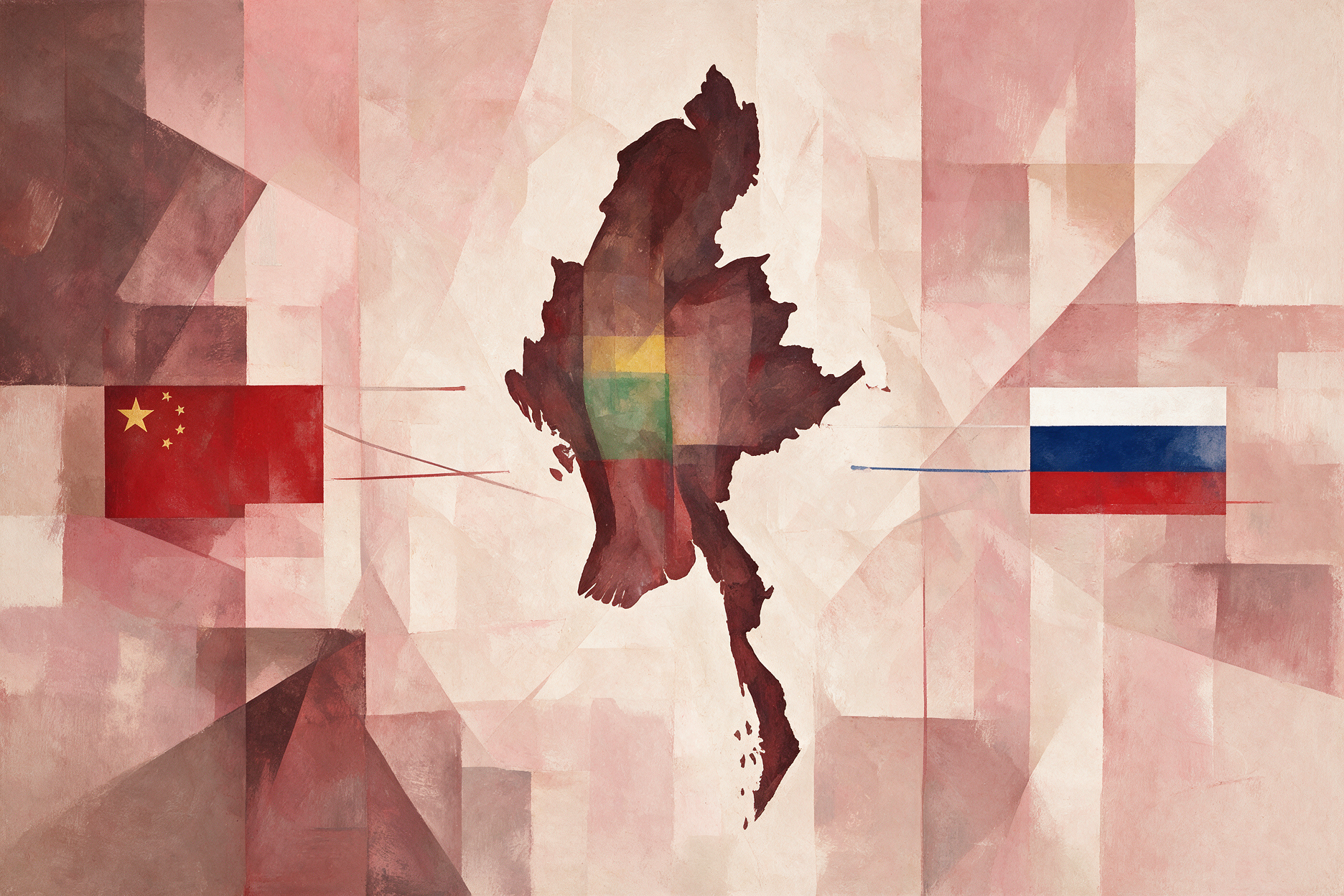
While Beijing and Moscow project global solidarity, Naypyidaw’s overtures to Russia over the strategic Dawei deep-sea port have exposed clear transactional limits. Seeking a counterweight to China’s regional dominance, the military-led regime risks provoking Beijing, which is countering Moscow’s maritime encroachment through quiet commercial containment, economic leverage, and accelerated corridor investments.

Min Aung Hlaing has reconstituted the military junta he leads into a nominal civilian government and elevated himself to president. Following this shift, the regime has mounted a diplomatic offensive to seat its representatives at the United Nations. However, the military junta is unlikely to secure Myanmar’s seat; the balance of probability heavily favors the incumbent delegation led by Ambassador Kyaw Moe Tun retaining its accreditation.
While some observers contend that China and Russia could exert decisive influence over select members of the Credentials Committee, the incumbent delegation still has the advantage. This resilience is anchored in the procedural protections of UN "Rule 29," alongside the pragmatic geopolitical interests and diplomatic standing of the major powers on the committee.

Naypyidaw has turned to Moscow to revive the long-stalled Dawei Special Economic Zone, offering majority ownership concessions to secure critical energy and maritime investments. However, this ambitious blueprint on the Andaman Sea faces formidable structural roadblocks, including active armed resistance, severe international financing constraints, and crippling baseline infrastructure deficits across southern Myanmar.
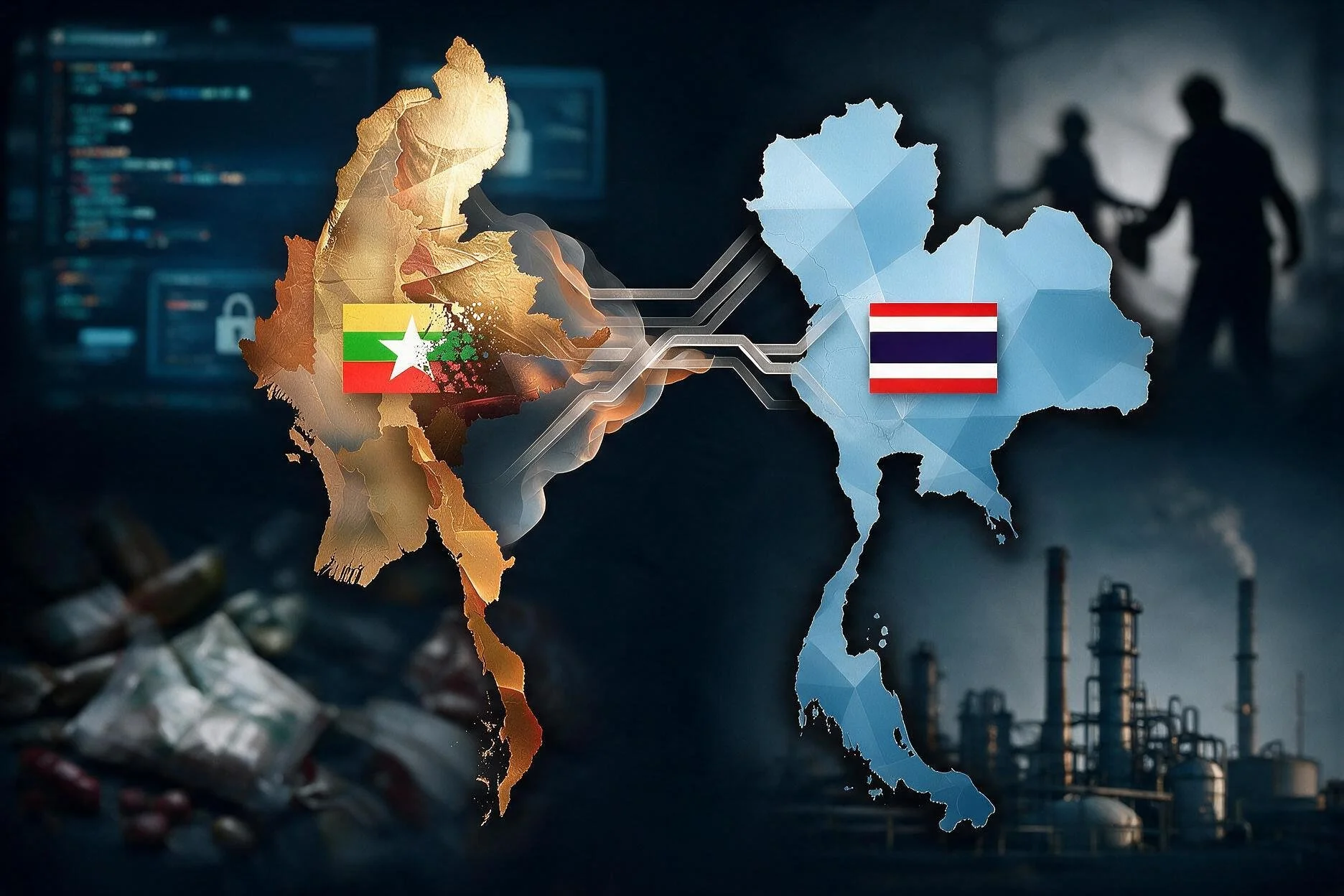
As Myanmar’s military intensifies pressure on Bangkok to choke off border supply lines feeding anti-junta resistance forces, Thailand faces a perilous strategic bind. Balancing vital offshore natural gas supplies and billions in frontier trade against rising cross-border crime and armed conflict, Bangkok must navigate between regime demands and the reality of non-state border control.
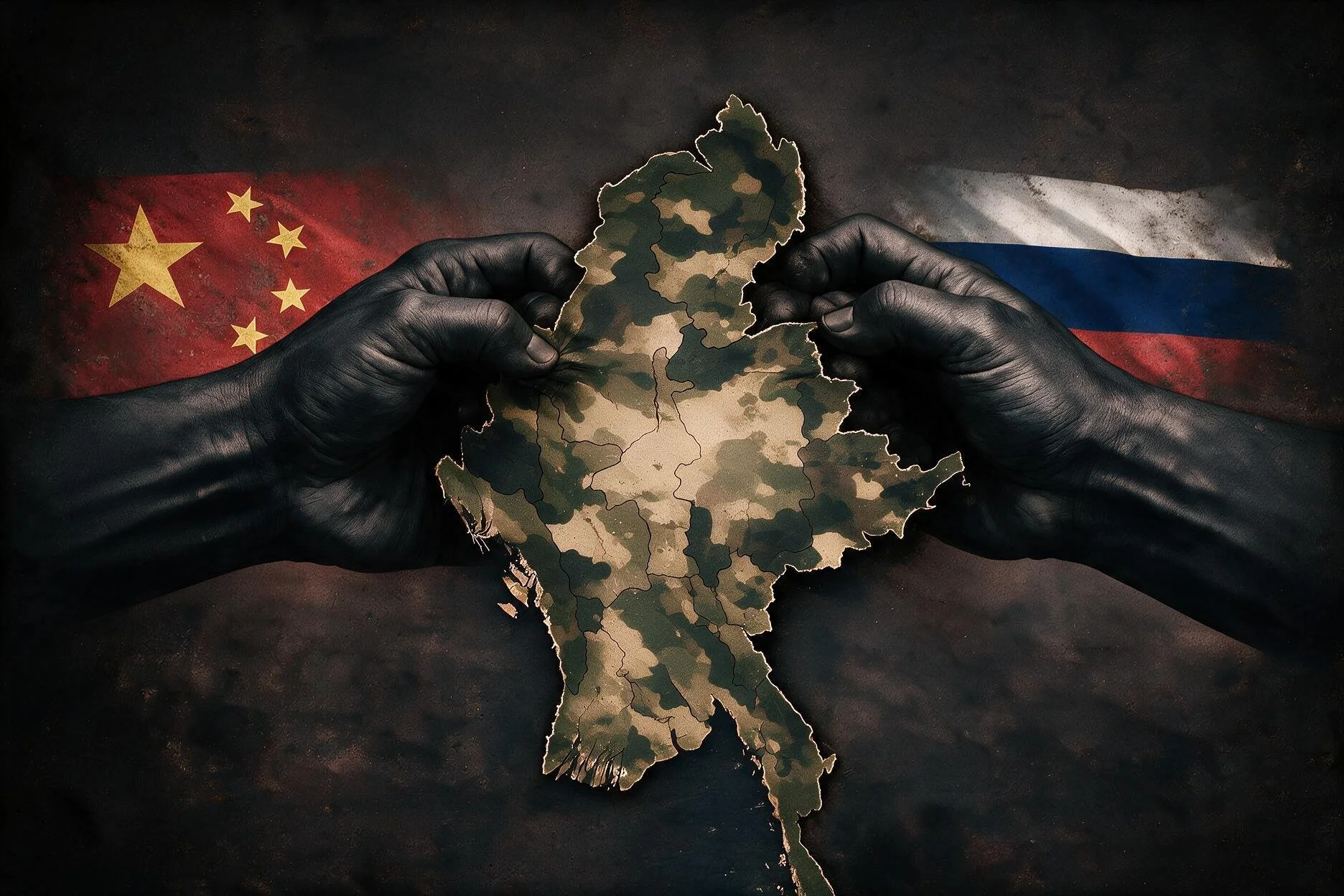
Following its transition into a military-led civilian government, Naypyidaw is aggressively courting Moscow with major oil, gas, and infrastructure concessions. Driven by deep distrust toward Beijing after Operation 1027, the regime seeks a geopolitical counterweight. However, offering majority stakes in the strategic Dawei SEZ risks compromising Myanmar’s sovereignty for short-term political survival.
This article examines the historical strategic manoeuvres in China-Myanmar relations, China’s diplomatic approach toward the military junta following the 2021 military coup, and the potential geopolitical and geoeconomic benefits China stands to gain should it provide long-term support to the Spring Revolution, analysed through the lens of selected international relations theories.
Despite international sanctions and ASEAN exclusion, the Myanmar regime has cultivated alternative multipolar ties to project an illusion of international legitimacy. Aiming to leverage these connections to claim Myanmar’s seat at the United Nations, the regime faces steep structural barriers. UN credentials precedents, major-power realpolitik, and fractured regional dynamics ensure this diplomatic gambit will ultimately fail.

Five years after launching a devastating coup, Senior General Min Aung Hlaing’s attempt to legitimise his rule through staged elections has collapsed against firm diplomatic resistance. Blocked by ASEAN from returning to full summit representation, the junta chief’s hostile threats to reject regional mediation signal a deeply cornered regime retreating into strategic isolation rather than projecting strength.
This article analyses Thailand’s historically transactional policy toward Myanmar and argues that recent efforts to engage military chief Min Aung Hlaing represent a major strategic error. By ignoring resistance gains, lost border control, and economic collapse, Bangkok risks damaging its international standing, long-term security, and future relations with the Myanmar people.

Following managed elections, Senior General Min Aung Hlaing appointed himself President of Myanmar, establishing a 100-day window to prove effective governance. As this deadline expires, empirical data confirms zero substantive recovery. Instead, Myanmar remains trapped in multi-systemic failure, characterised by intense armed conflict, economic contraction, illicit trade, public health collapse, and severe erosion of human capital.

On August 3, 2026, the International Committee of the Red Cross met privately with detained leader Daw Aung San Suu Kyi in Naypyidaw. This brief analyses the event, Burmese political reactions, and historical precedents of regime-ICRC interactions to outline strategic policy recommendations for revolutionary actors and international partners.
Myanmar’s Spring Revolution faces critical internal challenges. Beyond fighting the military regime, resistance forces are increasingly strained by inter-factional rivalries and territorial disputes. This analysis explores how internal divisions and junta-led disinformation threaten the movement's strategic momentum, emphasising the urgent need for unified, democratic principles during the revolution.
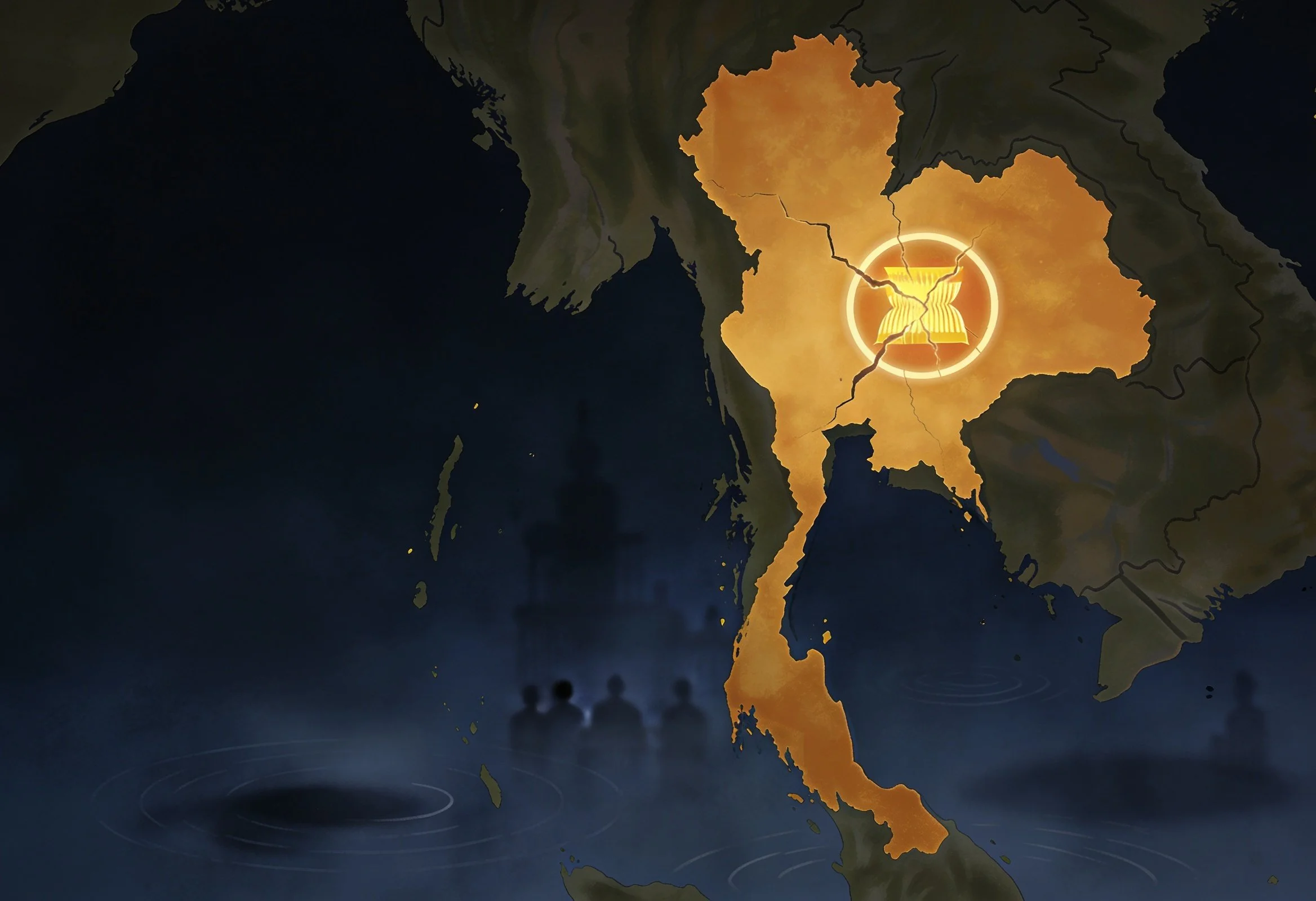
This critical analysis examines whether the recent informal Pattaya meeting advances ASEAN’s Five-Point Consensus or merely offers Myanmar’s military junta a path to political legitimacy. It reveals how intersecting Thai national interests, junta survival strategies, and legacy peace frameworks threaten to undermine a genuine resolution to Myanmar’s crisis.

Following the 2021 military coup in Myanmar, the junta has dismissed international peace initiatives as "internal interference." However, a closer examination of the ASEAN and UN Charters reveals that these diplomatic efforts—and the mandate for inclusive dialogue—align fully with international law and collective regional security responsibilities.

As the post-WWII international order fractures, the world is transitioning into a complex multipolar era. Examining shifts in global power, technological disruption, and domestic governance models like federal democracy, this article introduces "political gravity"—a framework of shared norms and institutions essential for maintaining stability amid growing global diversity.
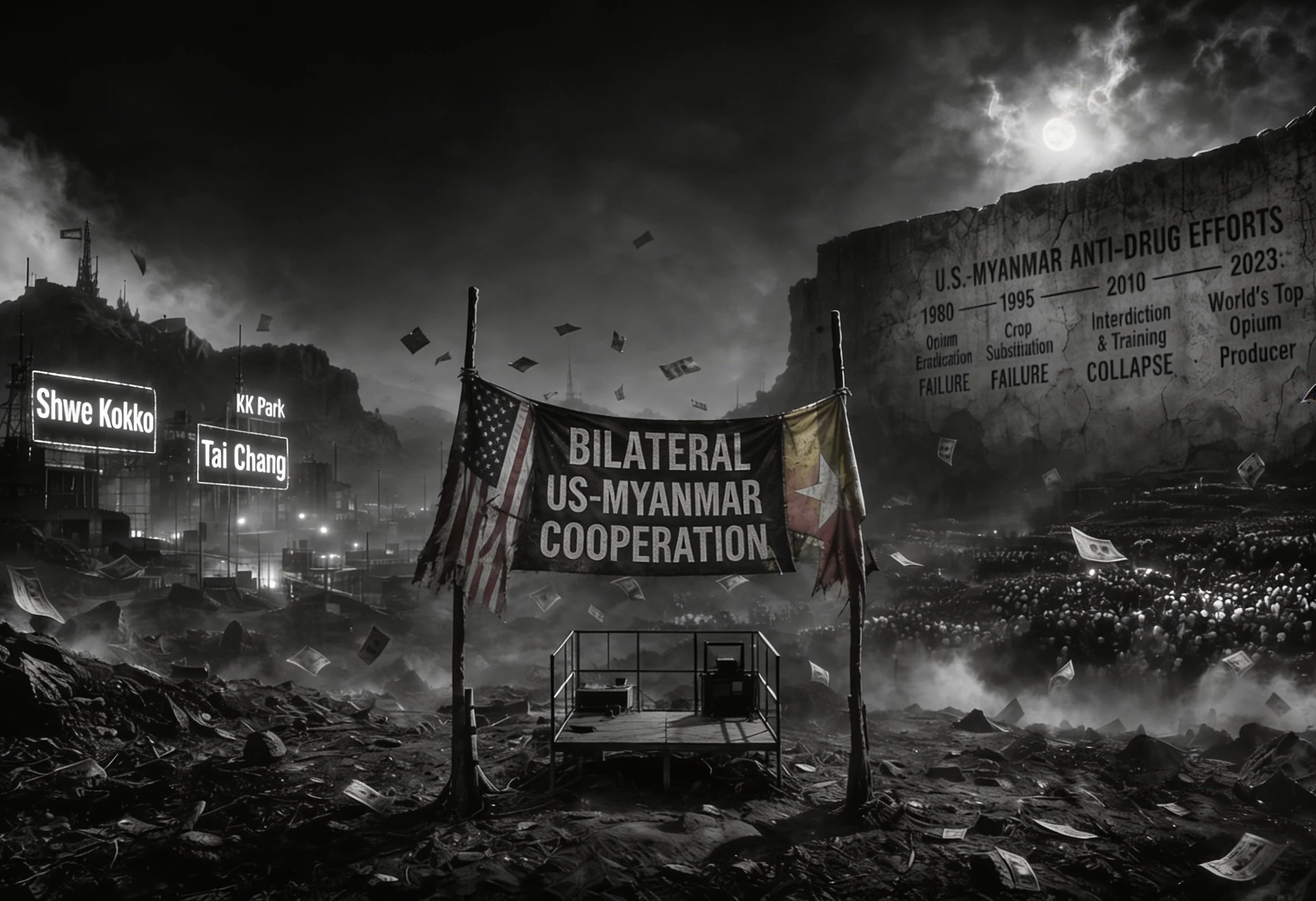
In late June 2026, U.S. officials quietly met with Myanmar’s military regime to discuss tackling Southeast Asian cyberscam centres. However, history warns that partnering with the junta—a primary beneficiary of this criminal enterprise—mirrors past failed anti-narcotics efforts, risking taxpayer dollars and granting unearned legitimacy to an oppressive regime.

Since the 2021 military coup, Myanmar's statehood has fractured under authoritarian rule. Denied domestic legitimacy, the junta relies on foreign powers—China, India, and Russia—who exploit its isolation for strategic resources. This erosion of popular sovereignty and territorial control traps the nation in a dangerous downward spiral toward complete state collapse.

This article examines how authoritarian regimes manipulate history to retain power, focusing on the path toward institutional redemption. It highlights that true stability and public trust require militaries to withdraw from politics, submit to civilian authority, and address historical trauma through genuine dialogue rather than force.
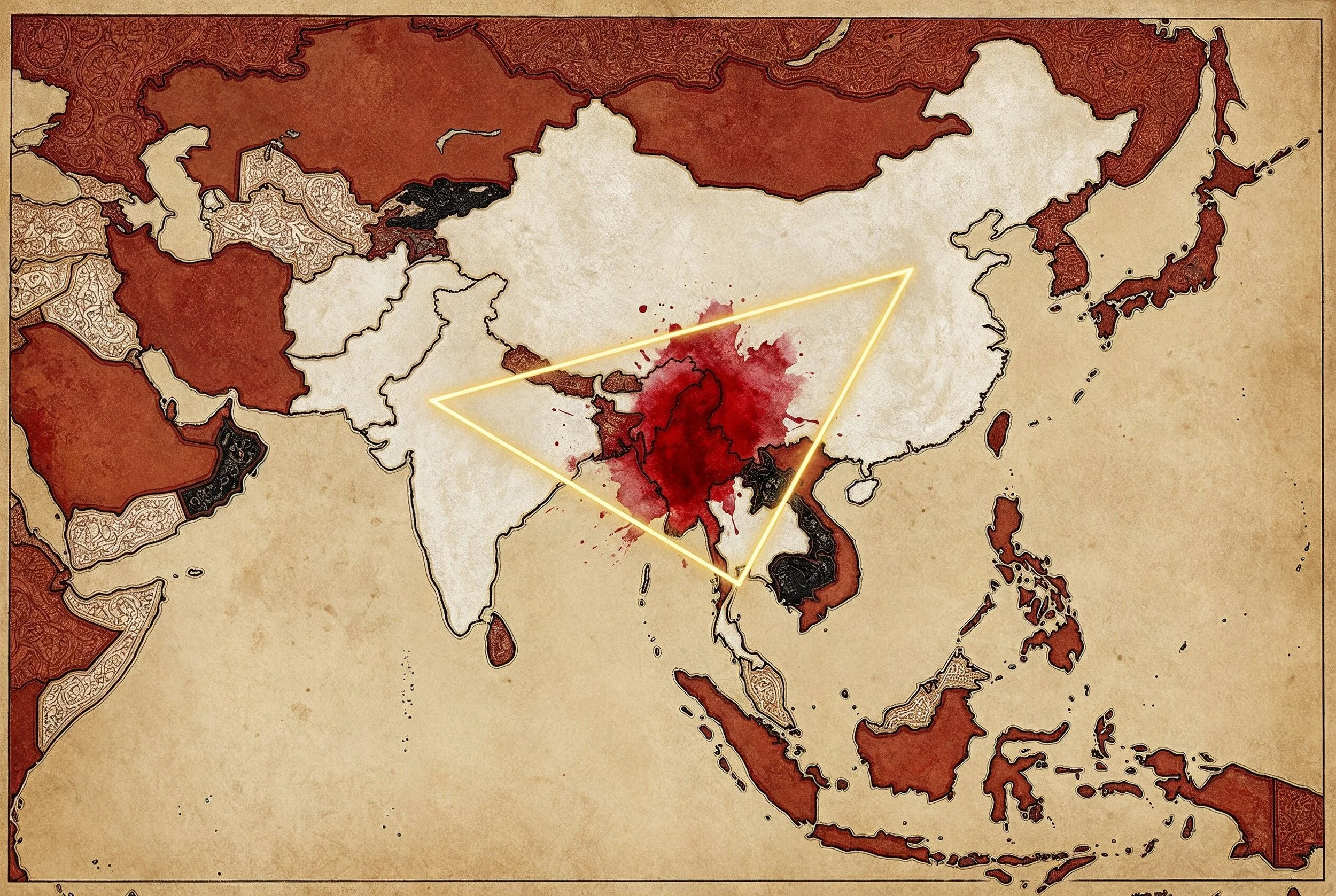
Since Myanmar’s 2021 military coup, the junta has maintained its brutal hold on power not through public legitimacy, but through regional support. This article reveals how neighbouring countries and corporations fuel the regime’s campaign of civilian violence by prioritising gas deals, trade, and strategic interests over human lives.

The air over Myanmar has transformed into a high-tech battlefield. Following the 2021 coup, both resistance forces and the military junta have adopted advanced drone warfare, ultralight terror tactics, and evasive global supply chains, turning the country into a deadly proving ground for asymmetric aerial combat.

Since the February 2021 coup, Myanmar’s military has waged a devastating nationwide arson campaign. By early 2026, over 125,000 civilian homes have been burned as part of a strategic "Four Cuts" doctrine to crush resistance, driving widespread displacement and triggering a critical humanitarian crisis across the country.

While a group of Theravada monks walks 2,300 miles for peace across America, others in Myanmar face accusations of inciting genocide at the International Court of Justice. This article explores how monks sharing the same scriptures and robes have diverged into radical nationalist violence and universal compassion.

The Spring Revolution in Myanmar united diverse ethnic and social groups against military rule, turning broad coalition-building into a powerful catalyst. However, unmanaged inclusivity has created strategic bottlenecks. This article explores how balancing diversity with effective decision-making and context-specific leadership is vital to avoiding a stalemate and achieving lasting democracy.
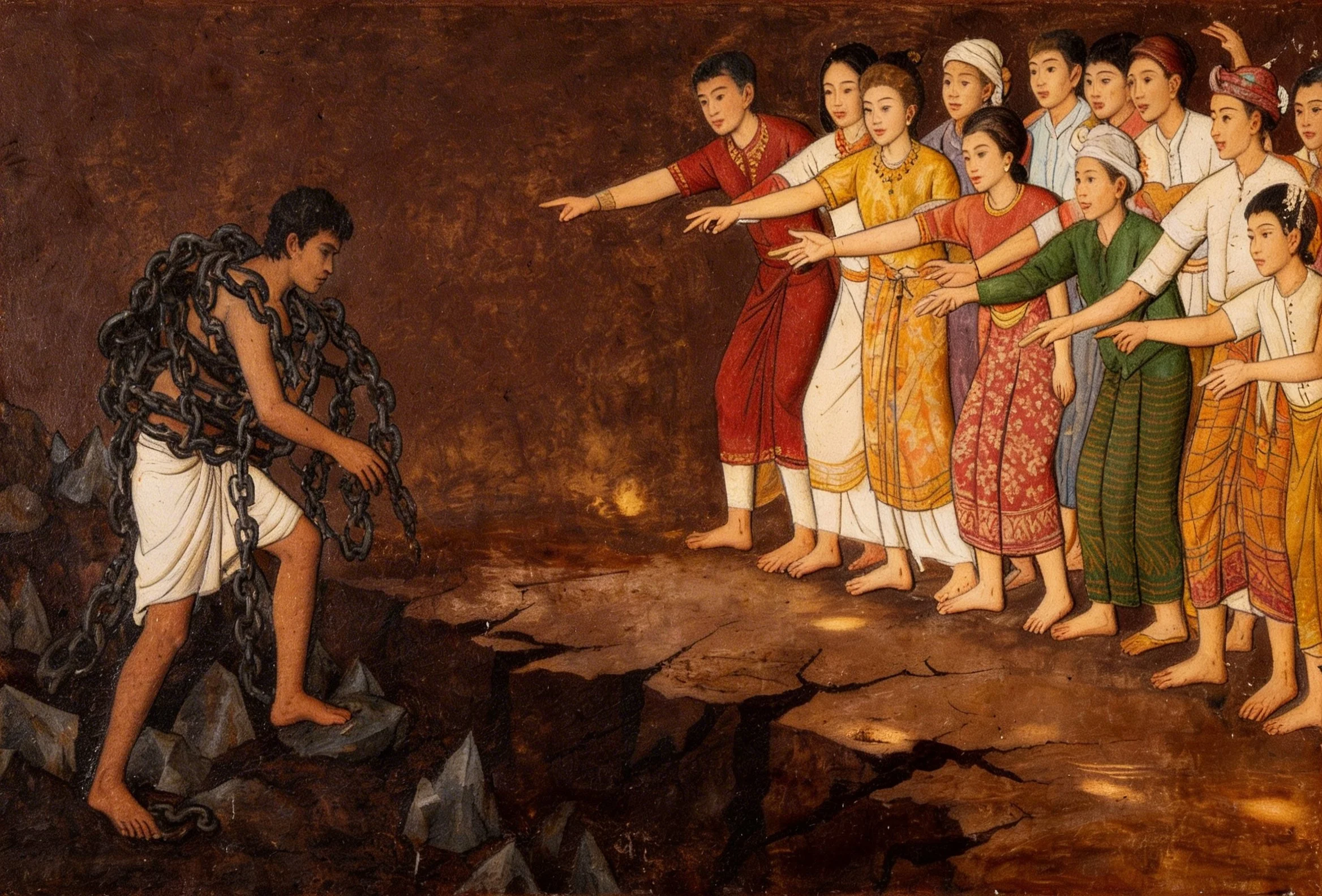
In Myanmar's struggle for democracy, unresolved frustration often leads to scapegoating—projecting collective failures onto vulnerable or convenient targets. Grounded in social psychology and ancient origins, this article examines how "displaced accountability" undermines trust among anti-dictatorship forces, stressing the need for fact-based dialogue to build a unified federal future.

By 2026, the Myanmar military (SAC) transformed the electromagnetic spectrum into a hostile zone using multi-frequency jammers and GPS spoofing. A sophisticated "grey market" supply corridor through Ruili, China, equips junta drones with anti-jamming tech while severe border blockades drastically choke the resistance's drone capabilities and supply chains.
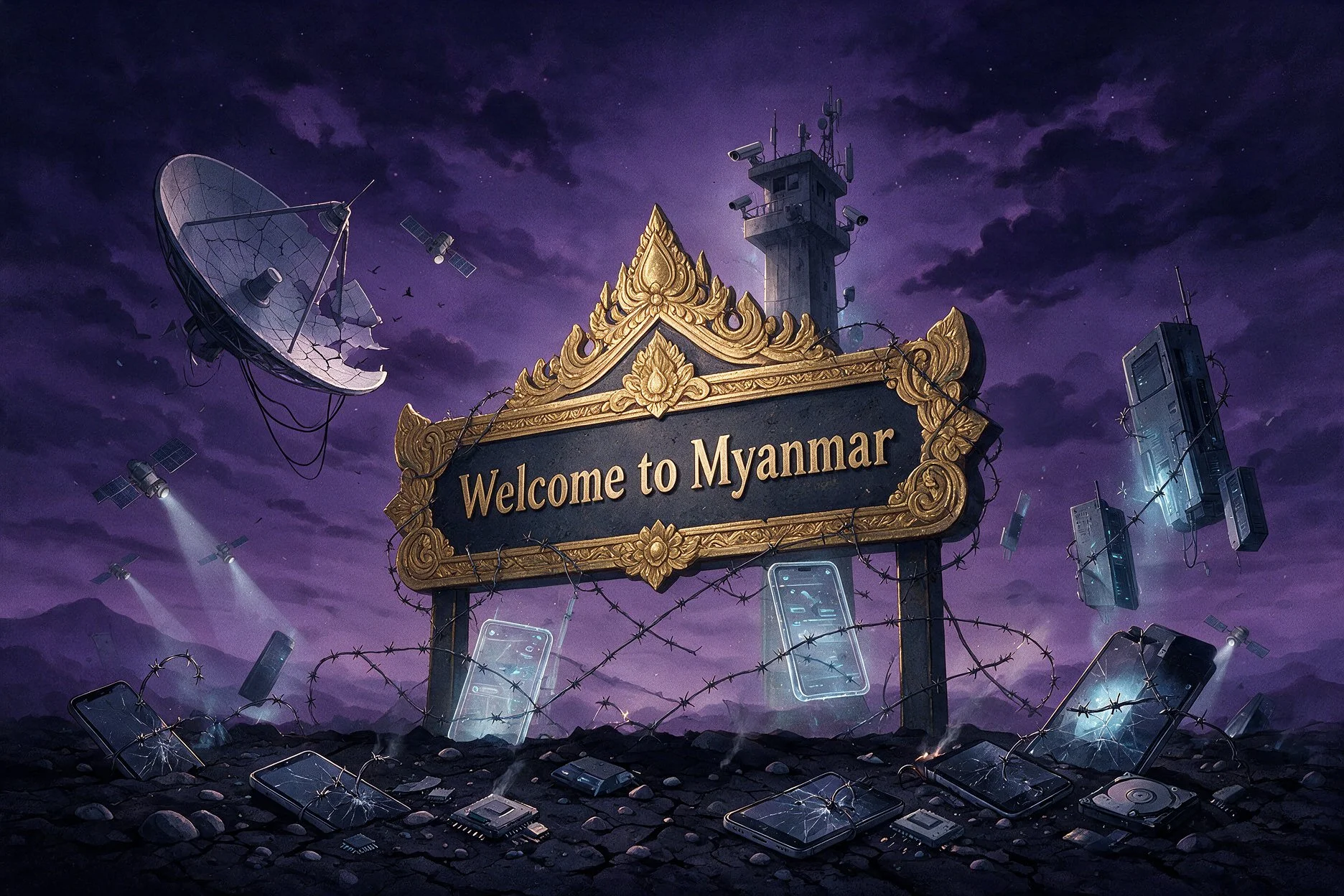
The transition of power in Myanmar has entered a chilling new chapter. What began as a military force in 2021 has evolved into an automated "Digital Dictatorship." As of 2026, the regime uses the 2025 Cybersecurity Law and hardware tracking to systematically criminalise the very fabric of digital life.

Five years after Myanmar’s 2021 coup, Western "smart sanctions" face a stalemate against the military junta's resilient shadow economy. Despite targeted restrictions, the regime sustains its air campaign by breaking fuel import records and exploiting regional loopholes—relying on Iranian ghost fleets, maritime evasion tactics, and a major pivot to Thai banking hubs.

In 2026, the international effort to isolate Myanmar’s military regime shifted into a high-stakes war of attrition. A coalition of the US, Canada, and the EU synchronized sanctions targeting foreign currency and aviation fuel. Meanwhile, the junta relies on shadow fleets, regional bridge banks, and non-aligned networks to maintain its critical lifelines.
The escalating conflict in Myanmar throughout 2025 and early 2026 marks a shift toward low-cost aerial terror against civilian infrastructure. Through silent paramotor gliders and domestically produced cluster munitions, the military has targeted schools, festivals, and hospitals. Fueled by illicit petroleum imports, these devastating strikes serve as a tool of state terror and election-period voter intimidation.